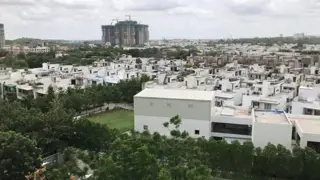
Rangareddy made up 44-46% of Hyderabad's home registrations in December 2025, Knight Frank India said. Rangareddy prices rose 13% year on year. Land asking rates in the district are about ₹1,967 per sq ft.
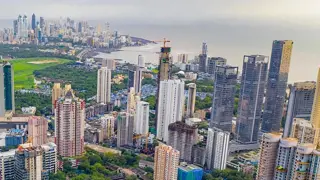
Knight Frank India says society redevelopment in Mumbai will add 44,277 free-sale homes worth ₹1.30 lakh crore by 2030, bringing in ₹7,830 crore in stamp duty and ₹6,525 crore in GST.

Mumbai’s property market crossed 1.5 lakh registrations in 2025, while stamp duty collections rose 11%, signaling strong end-user demand despite higher prices.

Hyderabad's residential market surged 73% YoY in registrations of homes over Rs. 1 crore in October 2025, making up 23% of all sales and 54% of transaction value. From Jan-Oct 2025, total value hit Rs. 43,048 crore, up 25% YoY, with average prices 14% higher than 2024, signaling strong buyer demand and the city's rise as a luxury housing hub.

Kolkata's housing market shifts dramatically as mid-sized apartments of 501-1,000 sq ft claim 58% of registrations in February 2026, up from 44% last year. Small units under 500 sq ft drop to 32% from 52%, driven by post-pandemic demand for spacious homes ideal for work-from-home and family living. Developers adapt swiftly to this buyer preference for practical, larger spaces.

Kolkata's residential market surged to 46,742 apartment registrations from January to September 2025, a 32% year-on-year rise and the highest since 2020. September recorded 5,302 units amid stable prices and infrastructure boosts. Knight Frank data reveals 53% demand for 500-1,000 sq ft homes, signaling a shift to spacious living in key zones like South and North Kolkata.

Rangareddy district captured 47% of Hyderabad's residential registrations in October 2025, boasting the city's highest 22% year-on-year price growth. Demand for premium homes over Rs. 1 crore surged 73%, led by hotspots like Narsingi, Manikonda, and Puppalaguda, cementing its role as the real estate powerhouse amid festive momentum and infrastructure gains.

Pune's luxury housing market hit 15% share in September 2025, up from 14% last year, as properties over ₹1 crore gain traction. Knight Frank India and Cushman & Wakefield data show bigger homes above 800 sq. ft. at 29% of sales, fueled by IT growth and infrastructure boosts in areas like Hinjewadi and Kharadi.

Pune's real estate market surged in September 2025, logging 13,557 property registrations—a 23% year-on-year jump and the highest in four years. This boom generated ₹523 crore in stamp duty, driven by affordable homes under ₹1 crore (85% share) and central areas like Haveli Taluka, PMC, and PCMC accounting for 61% of deals. Festive shifts and steady demand fuel this resilient growth amid evolving.

Wave City in Ghaziabad recorded over 25% sales growth during the Diwali 2025 festive season, per IBRF data, fueling NCR's 24% annual housing price rise in Q3 2025, the highest in major Indian cities. Knight Frank India notes luxury sales up 15-20%, driven by policy stability and buyer confidence in premium homes.

Despite economic hurdles like steady repo rates at 5.5% and increasing home loan EMIs, Mumbai's top micro-markets see property prices rise 8-10% yearly, per Knight Frank India. A Reuters poll forecasts urban home prices growing 6.3% in 2025 and 7% in 2026, surpassing salary increases in many areas.

According to Knight Frank India's latest report, Kolkata Metropolitan Area saw 6,196 home registrations in August 2025, up 15% from last year and 33% from July. Mid-sized apartments dominated, signaling robust market growth ahead of national averages.

Kolkata's residential market showed remarkable strength in July 2025 with property registrations jumping 33% year-on-year, driven by compact apartments and South Zone dominance.

Mumbai's property market recorded 11,230 registrations in August 2025, marking the second-best August performance ever despite monsoon challenges and positioning the city to cross 1 lakh annual milestone.

Hyderabad's real estate market recorded 6,391 June 2025 property registrations, marking a monthly high despite 9% YoY drop, fueled by luxury and large home surges. Premium areas like Shaikpet and Kondapur saw multi-crore transactions as the luxury segment expanded to 21% of sales.

Rangareddy district recorded a 20% year-on-year increase in property prices during June 2025, fueled by infrastructure expansion and premium housing demand surge. The area attracted 49% of registrations as luxury units dominated transaction value, reflecting Hyderabad's market evolution toward high-end residential developments.

Despite a 12% YoY drop in Hyderabad’s April 2025 property registrations, Ranga Reddy recorded a 2% rise in ₹1 crore+ home sales, contributing 51% of the district’s transaction value. Luxury demand surged in Medchal-Malkajgiri and Sangareddy, driven by spacious homes over 2000 sq ft.

Rangareddy District secured 41% of Hyderabad's residential property registrations in January 2025, second only to Medchal-Malkajgiri (45%), highlighting sustained demand in the region.

Mumbai's real estate market experiences a typical monsoon slump, but post-COVID-19, pent-up demand and waterlogging have significantly influenced pricing and transaction volumes.
Pune's priciest penthouse sold for Rs 37 crore in Lodha One, Bund Garden. Luxury apartment deals surge, with 32 transactions exceeding Rs 10 crore in two years.
Mumbai's property registrations rose by 11% in June 2024, with a significant increase in stamp duty collections, showcasing the market's resilience and growing buyer confidence.

Developers from Bengaluru and Mumbai increase footprint in each other's cities, driven by growth, sales velocity, and better margins, with some finding lower land prices in Bengaluru attractive.
Mumbai's real estate market saw a 9% increase in property registrations and a 16% increase in stamp duty collections in April 2024, with millennials making up 37% of buyers.
Pune Sees 30% YoY Increase in Stamp Duty Collections to Rs 804 Crore in March 2024
India's Q1 2024: 9% rise in home sales, 43% surge in office leasing, driven by global capacity centers, with Mumbai leading residential growth.