
India's real estate sector, particularly residential, is rebounding thanks to government policies like reduced home loan interest rates and tax relief, attracting more buyers and foreign investment.

CREDAI plans to request amendments to the Real Estate Bill from the Central Government, fearing increased housing costs and discouragement for smaller developers.

Tier-II and Tier-III cities in India are experiencing significant growth in residential real estate transactions, contrasting with the slowdown in major metros.

Investment in township projects around cities and suburbs is seen as a better option, with experts suggesting that these areas hold more potential for growth and higher returns.

Removing the cap on loans has boosted NRIs' desire to invest in Indian real estate. Approx. 90% of NRIs in UAE prefer real estate investment in India.
Real estate brokers in major Indian cities are switching to other businesses due to a slump in home sales. Smaller players are particularly affected, forcing many to seek jobs in different sectors.
The realty market witnesses a resurgence in demand for luxury homes, not just in prime locations like Bangalore and Mumbai but also in tier-II and tier-III cities like Nagpur and Ahmadabad.
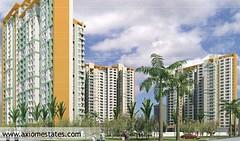
Indian real estate is experiencing a resurgence due to increased construction, especially in affordable housing, and record-low home loan rates. This has led to renewed optimism among consumers, particularly in Tier II and Tier III cities.

Middle-class families struggle to find affordable housing in metro cities, often facing poor designs and compromises in quality. Design standards are needed for builders.

Housing demand in tier-II and tier-III cities plummeted by 35% in the first half of the fiscal year, primarily due to increased borrowing costs, as per Assocham's assessment.
Real estate sector faces slump due to high interest rates and economic slowdown, forcing developers to focus on affordable housing in Tier-II and Tier-III cities.
FIRE Capital Fund is poised to enter the affordable housing segment, focusing on Tier II and III cities, with plans for a new investment in West Bengal.

Mumbai is the top choice for logistics and warehousing investment, attracting $200 million. Smaller cities like Nagpur, Gurgaon, and Visakhapatnam are also emerging as promising logistics hubs.
Milestone launches Ecofirst Advisory Services for eco-friendly real estate consultancy, aiming to support sustainable development across India, including Tier II and III cities.

India and China significantly improve real estate transparency in Asia Pacific, ranking in semi-transparent and low transparent levels respectively.
Real estate appears resilient to inflation, with experts predicting a price drop of 5-10 percent. It's considered a favorable time for property investment, especially in Tier II and III cities.
Red Fort Capital plans to invest Rs 3,500 crore in Indian real estate projects over the next two and a half years, focusing on Tier I and II cities, and potentially Tier III locations.

By 2015, airport modernization aims to add 78 million square feet of real estate, boosting non-aeronautical revenues significantly, especially in retail and office spaces.

Old Mutual plans to significantly ramp up investments in Indian real estate, launching four new $1 billion funds by 2015, aiming to become a leading retail developer and asset manager.
Realty giants are embracing the affordable housing sector, launching low-cost residential projects targeting small and mid-income buyers in various Indian cities.