
Indian real estate employment has risen from 4 crore in 2013 to 7.1 crore, driven by housing sector growth and government policies like RERA, GST, and PMAY.
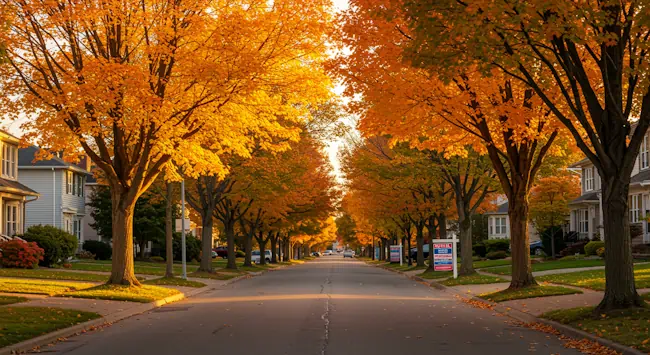
Residential sales in Bengaluru fell 2% YoY in Q1 2024, while sales of units priced above Rs 1 crore saw a 40% increase across top 8 cities.

Indian real estate developers aim for 3,000 acres in land deals in FY24, a 59% increase from last year, driven by increased land availability and high demand.
Indian real estate began 2024 strongly, with residential property demand rising despite price increases. Top cities saw increased housing sales, indicating market resilience.
Motilal Oswal Alternates announces the first close of its sixth real estate fund, IREF VI, targeting investments in mid-income/affordable residential projects across India’s top 8 cities.

Real estate developers are aggressively acquiring land in India, particularly in major cities, driven by high housing demand. This trend is expected to continue in 2024, with Tier-1 and developing areas remaining hotspots.
Hyderabad's demand for 3BHK homes is driven by changing lifestyles and financial factors, prompting developers like IRA Realty to meet this trend with new projects.
Isnapur, a growing residential hub in Hyderabad, attracts investors due to its strategic location, affordability, and proximity to commercial areas and modern amenities.
The demand for luxury real estate continues to rise, with buyers showing an insatiable appetite for lavish homes. A recent Anarock study indicates a significant increase in luxury property sales across metropolitan areas.
India ranks 14th in Knight Frank's global house price index, with a 5.9% annual price rise due to strong economic fundamentals despite rising loan rates and inflation.
India's top residential markets saw 22% sales growth and 17% new supply increase in Q3 2023, driven by positive sentiment, pent-up demand, and steady interest rates.
Sales of luxury homes valued at Rs 4 crore and above rose 97% over the previous year in major Indian cities from January to September 2023.

The supply of commercial real estate in India's major Tier-1 cities increased by 7% in Q3 2023, reaching 14.61 million square feet. Hyderabad and Bengaluru led the growth.
Marriott Executive Apartments in Hyderabad offers a unique blend of spacious accommodations, diverse amenities, and strategic location for long-term stays and convenient living.
Lakeview County apartments offer a refreshing alternative to metro living, boasting serene environments, lower property taxes, and potential for passive income through rentals.
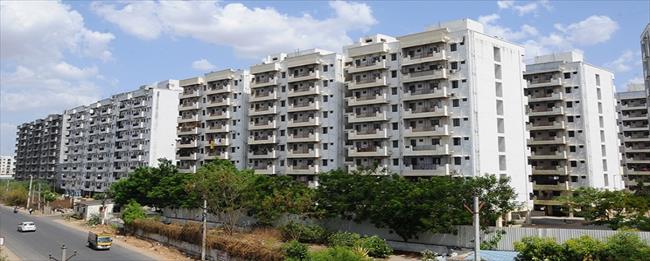
Rajiv Swagruha Flats in Hyderabad offer luxurious living with amenities, central location, and connectivity, available in 1-4 BHK, with prices starting from Rs. 18 lakh
Attapur, a new suburb in Hyderabad, is rapidly becoming a prime residential area due to its proximity to educational institutions and IT hubs.
Hyderabad's western zone, including Ghachibowli, Manikonda, Chandanagar, and Kondapur, is attracting residential investment due to IT hubs, affordability, and strong infrastructure.
Hyderabad emerges as new investment hub for commercial property developers from Bengaluru, amidst city's real estate revival
Hyderabad's real estate sector showed promising growth in the last quarter of 2016, with significant impacts on the residential and commercial markets due to government initiatives and demonetisation.
Residential real estate markets in top eight Indian cities show improved sales and decreased unsold inventory, except for NCR which still struggles with a high volume of unsold units.
Housing prices rose up to 6% in 12 Indian cities, while 10 cities saw a decline of up to 9% in Q2 FY24. Delhi-NCR experienced a 5% dip QoQ but a 7% YoY surge.
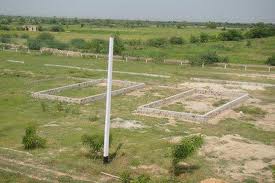
Hyderabad district officials identify 66 acres of litigation-free government land worth crores. They plan to develop schools, hostels, and housing on this land.

Chief Minister N Kiran Reddy has urged HMDA to expedite ongoing projects, approved preparations for the Secundrabad Cantonment area master plan, and introduced various initiatives including the Land Pooling Scheme.
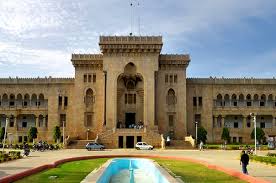
HMDA rejects BPS papers of 65 educational institutions in Hyderabad for non-compliance with regularization rules. Demolition possible, but officials are proceeding cautiously.