Credai Maharashtra praises state's decision to reserve 20% of flats for the weaker section in developments on one acre of land. The policy aims to reduce slums and provide affordable housing.

Gurgaon's Rapid Metro boosts property prices, rentals in surrounding areas by up to 90%

The local real estate market in Gujarat is gearing up to capitalize on Maruti Suzuki's planned plant, with builders acquiring land for residential and commercial development.
Reliance Group sells 35 of 100 upmarket flats in Navi Mumbai's NRI Seawoods Complex, seeking Rs 125-270 cr for remaining units.

A recent survey of India's top cities reveals a struggling real estate sector with substantial unsold inventory, particularly in Delhi-NCR, Mumbai and Bangalore.
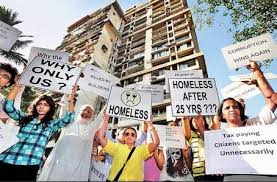
Campa Cola residents refuse to vacate illegal flats, defying Supreme Court's deadline. Civic officials prepare for demolition amidst resident resistance.

Mumbai residential buildings at high fire risk, with 90% violating safety guidelines in recent inspections.
Pune real estate has seen significant price growth since 2011, but sales have recently slowed. It remains more affordable than Mumbai and NCR, supporting its market.
Aditya Birla Group invests Rs 130 cr in a residential project on Dwarka Expressway by Tata Housing and Sidhartha Group, with expected IRR of 25-27% over four years.
Noida is transforming into a luxury real estate hub with high-end residential and commercial projects by Bhasin Group, Premia, Four Seasons, and Supernova.
Property prices may drop 12-17% in Delhi-NCR, Mumbai, and high-end markets by next Diwali, as developers aim to reduce inventory and increase sales. New launches have decreased significantly.
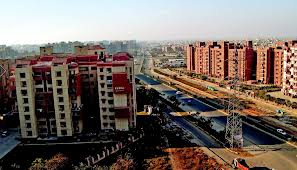
The Dwarka-Gurgaon Expressway, also known as the Northern Peripheral Expressway, is set to become a hotbed for real estate investment with significant growth potential in the coming years.
Delhi-NCR housing sales rise 20% in H1, driven by affordable launches, with 37,000 units sold, despite overall market slowdown
In the first half of the year, India's major cities witnessed the launch of 1.32 lakh homes, a 5% increase compared to last year. New launches have declined in Q3.
Vastubodh Projects secures ₹40 crore from Avenue Partners for affordable housing projects, particularly AnandGram, to boost their development efforts in Pune.

Dalmia Group’s Landmark exits Wave Group's Ghaziabad project, earning 3.16 times its initial investment of Rs 111.26 crore amidst market slowdown.
Bhiwandi, Rajasthan, is emerging as a promising affordable housing hub due to its strategic location, industrial growth, and infrastructure development. It's becoming a sought-after area.
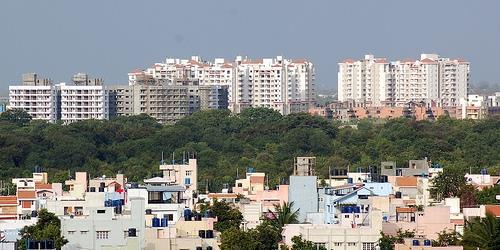
Bangalore real estate market sees increased unsold stock and varied demand across different parts of the city.
Indian housing prices saw a modest quarterly increase of 0.89% yet remain 14-15% higher yearly. Lucknow, Ahmedabad and Kochi experienced the most significant growth.
Tier-II and Tier-III cities in India are experiencing significant growth in residential real estate transactions, contrasting with the slowdown in major metros.
Southern Indian cities, Chennai & Bangalore, outperform NCR in real estate returns (40-70% vs 15-20%) & new launches, driven by user-demand vs investor-driven markets.
Indian real estate deliveries face significant delays in 2013, impacting homebuyers. NCR lags behind, while Pune and Mumbai show better performance. Factors such as capital shortage, over-leveraging, and land availability contribute to the slowdown.
The real estate market, once a high-growth sector, is currently facing challenges due to economic slowdown and revised funding rules. Experts advise caution and research before investing.
Property prices in NCR's micro markets have nearly doubled, with notable growth in areas like Gurgaon's Golf Course Extension and Dwarka Expressway.
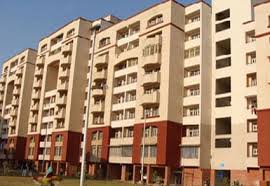
DDA to auction 60 prime plots in Delhi after a year-long hiatus. The auction, scheduled for November, includes plots in Pitampura, Vikas Puri, and East of Kailash, with base prices exceeding ₹1 crore.