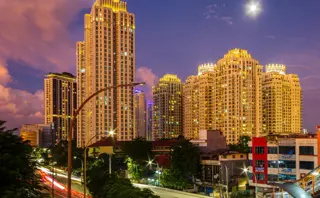
Kolkata's luxury real estate market is rapidly expanding beyond traditional affluent zones as new hubs like Newtown and Rajarhat attract HNIs from IT, fintech, education, and healthcare seeking modern, amenity-rich homes.
Global investment giant Blackstone Group is poised to acquire Kolkata’s South City Mall in a record ₹3,480 crore ($400 million) deal, marking eastern India’s largest mall transaction and signaling heightened investor interest in Kolkata’s retail real estate market. The acquisition will expand Blackstone-led Nexus Select Trust’s portfolio, reflecting confidence in India’s commercial property...

Kolkata's real estate market is undergoing a transformative shift with green homes prioritizing eco-friendly features, energy efficiency, and sustainable urban living. Driven by government initiatives, evolving buyer preferences, and luxury trends, these properties are reshaping the city's housing landscape while addressing environmental concerns.
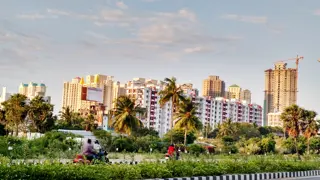
Discover how Rajarhat combines IT sector growth, strategic airport proximity, and modern infrastructure to become Kolkata's prime real estate hub for 2025, attracting investors with high appreciation potential and robust rental yields.

Kolkata's housing sales fell 28% in Q1 2025, contrasting with 2024's growth, as economic uncertainty and rising prices impacted buyer confidence, reflecting shifting market dynamics.

Kolkata's office real estate thrives as MNCs and tech firms drive demand for premium spaces featuring advanced tech, flex layouts, and productivity-focused designs.

Kolkata's real estate embraces co-living surge as affordable, community-driven housing gains traction among students and young professionals.
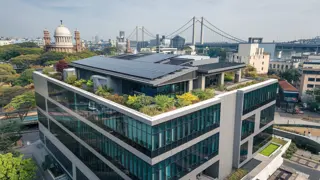
Kolkata’s real estate sector embraces sustainable practices driven by environmental concerns and long-term cost savings, with energy-efficient systems and green certifications gaining prominence.
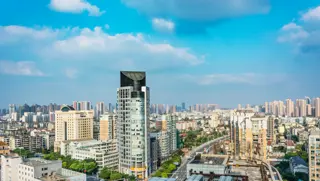
Kolkata's residential market is projected to sustain its robust trajectory in 2025, with sales surpassing 17,000 units and ₹12,000 crore in value, reinforced by its status as India's most affordable major market.

Kolkata’s retail sector is experiencing accelerated growth with a 70% surge in leasing, driven by premium malls, high-street outlets, and integrated mixed-use hubs blending retail, offices, and residences to redefine urban living.

Indian real estate employment has risen from 4 crore in 2013 to 7.1 crore, driven by housing sector growth and government policies like RERA, GST, and PMAY.
Motilal Oswal Alternates announces the first close of its sixth real estate fund, IREF VI, targeting investments in mid-income/affordable residential projects across India’s top 8 cities.

The demand for luxury real estate continues to rise, with buyers showing an insatiable appetite for lavish homes. A recent Anarock study indicates a significant increase in luxury property sales across metropolitan areas.
India's top residential markets saw 22% sales growth and 17% new supply increase in Q3 2023, driven by positive sentiment, pent-up demand, and steady interest rates.
Kolkata's Tallest Building: 'The 42' Offers Ultra-Luxurious Residences
The residential real estate market in Kolkata has shown a strong recovery with a 124% year-over-year increase in property registrations in July 2022.

The West Bengal government has extended the real estate stamp duty rebate and circular rate reduction until January 31, 2022, to boost home sales amid rising demand.

NKDA has initiated a special camp to assist property taxpayers in New Town, Kolkata, addressing challenges posed by the pandemic, especially for the elderly.

Delhi-NCR sees a surge in affordable housing demand, with Gurugram leading the way. Anarock's survey reveals a 10% increase in demand during the pandemic.
Bangalore surpasses Mumbai as India's most expensive city, according to RBI's CPI. High living costs attributed to the IT industry and inflated prices of essential goods.
Kolkata's residential market rebounds post-demonetization with innovative price protection schemes. Demand has surged by 15%, boosting sales and queries.
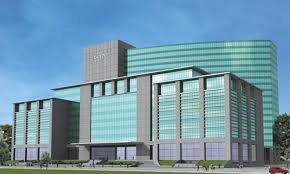
Godrej Properties buys back 49% stake in Kolkata IT Park from Red Fort Capital
Housing prices rose up to 6% in 12 Indian cities, while 10 cities saw a decline of up to 9% in Q2 FY24. Delhi-NCR experienced a 5% dip QoQ but a 7% YoY surge.
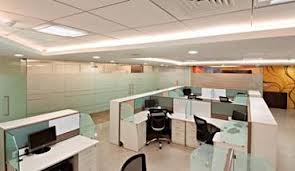
Experts predict that a decline in office space supply will pressure rental values, while corporate relocation and economic factors affect demand across major cities.

Shapoorji Pallonji Group plans to expand its IT parks by 52%, adding 2 million sq ft to its existing 5 million sq ft portfolio across India.