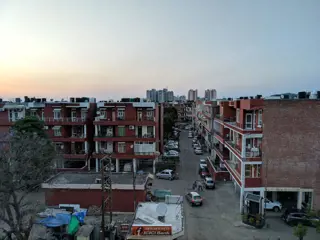
 Panchkula's rental market is driven by the tricity economy. Many tenants work or study in Chandigarh and Mohali but want more space, greener streets and lower rents than the city centre offers. This guide explains how to turn that demand into a steady monthly return in the ₹20,000-₹50,000 rent band.
Step 1: Know what you are buying into
Apartments dominate Panchkula's housing stock, followed by independent houses. Asking prices on PropertyWala put apartments for sale in Panchkula at about ₹12,293 per sq ft (2025 Q4 to 2026 Q3), up 34.6% on the year before. Independent houses were asking about ₹19,586 per sq ft over the same period.1 Apartments make up roughly 71% of properties listed in the city, while independent houses account for about 17%. Offices make up only a small share.1
For landlords, the implication is simple: rising purchase prices squeeze yields unless rents rise too. Calculate the numbers before you buy.
Step 2: Calculate the yield properly
Gross yield is annual rent divided by the purchase price. Net yield is what remains after costs.
- Annual rent: Multiply the monthly rent by 12.
- Subtract vacancy: Allow at least one empty month a year. Flats popular with students often remain empty for longer around exam and admission cycles.
- Subtract running costs: Include property tax, maintenance charges, repairs between tenants and any broker fee.
- Divide by the full acquisition cost, including stamp duty, registration charges and furnishing.
For example, a flat bought for ₹90 lakh and let at ₹30,000 a month earns ₹3.6 lakh a year, giving a gross yield of 4%. The same rent on a ₹60 lakh flat gives 6%. As prices have risen faster than most rents, a cheaper purchase in the right location often delivers a better yield than a more expensive address.
Step 3: Match the rent band to the tenant
The ₹20,000-₹50,000 range covers three distinct tenant groups. Choose the property to suit the tenant.
| Monthly rent | Typical tenant | Best-suited home |
|---|---|---|
| ₹20,000-₹28,000 | Single professionals, students sharing, early-career workers | 1-2 BHK flat, semi-furnished |
| ₹28,000-₹38,000 | Couples and small families working in Chandigarh or Mohali | 2-3 BHK flat in a gated society |
| ₹38,000-₹50,000 | Families, senior executives, bank and government staff | 3 BHK flat or the upper floor of a house |
Step 4: Read demand by type of sector
Panchkula is laid out in numbered sectors, and demand follows a similar pattern across them.
- Sectors bordering Chandigarh: These offer the shortest commute and tend to attract the steadiest tenants. Rents are highest, but purchase prices are too, so yields are usually lower. Vacancy is also lowest.
- Sectors along the main arterial roads and near the Zirakpur and Mohali side: These appeal to IT and corporate workers who drive to Mohali. Newer apartment societies here attract working couples looking to rent 2 BHK units in the middle of the band.
- Sectors near colleges, coaching institutes and hospitals: These draw steady demand for 1 BHK and shared flats from students and trainee staff. Yields can be good, but tenant turnover is higher.
- Outer and newly developing sectors: These have lower entry prices and the best gross yields on paper. However, it can take longer to find a tenant until daily amenities such as schools, markets and transport catch up.
Browse the current rental stock on the Panchkula page and compare asking rents sector by sector before committing.
Step 5: Watch the infrastructure that moves commutes
Tenants pay for shorter commutes. PropertyWala's own report in October 2026 covers the cabinet approval of a ₹1,878-crore, six-lane Zirakpur bypass intended to ease tricity traffic. A related report tracks the Zirakpur-Panchkula bypass moving into its execution phase. Sectors on the Zirakpur and Mohali side stand to benefit most from easier travel. This is a reason to shortlist those sectors, not a guarantee of higher rent.
Step 6: Choose the property
- Lift and parking: Families in the ₹35,000-plus band expect covered parking and a working lift. A flat without them is less competitive.
- Furnishing level: Semi-furnished homes with wardrobes, a modular kitchen, fans and geysers suit most working tenants. Fully furnished homes work for single professionals and command a premium, but repairs from wear and tear fall to the landlord.
- Layout: Two proper bedrooms are more useful than a large hall with one bedroom. Sharers and small families both look for two lockable rooms.
- Society rules: Check whether the society allows bachelors or sharing. A flat that cannot be let to students misses out on a key group of tenants.
- Houses: Upper floors of independent houses attract families in the higher rent band, but a separate entrance and a clear meter arrangement matter.
Step 7: Choose and verify the tenant
- Ask for an employer letter or recent salary slips. For students, ask for an admission letter and a parent's contact.
- Collect photo ID and address proof, and keep copies.
- Submit tenant details to the local police for verification. Haryana Police runs this process, so ask the local station or the Haryana Police website how to file it.
- Take a security deposit of one to two months' rent. Two months is common for unfurnished flats.
- Prefer a tenant who stays eleven months or more. Each changeover costs a vacant month, as well as cleaning and repainting.
Step 8: Document it
Sign a written rent agreement, normally for 11 months, listing the rent, deposit, annual increase (5-10% is common), notice period, maintenance split and lock-in. Pay stamp duty at the rate Haryana prescribes for the term, and register the agreement if the term exceeds 11 months. Rental income is taxable, so keep rent receipts and report the income in your return.
Step 9: Keep the yield up
- Revise the rent every year through a clause in the agreement instead of waiting for the tenant to leave.
- Fix small repairs promptly. A tenant who feels looked after is more likely to stay longer.
- Start looking for the next tenant 30 days before the notice period ends.
- Re-price against current asking rents in your sector once a year.
Frequently asked questions
**What is a good rental yield in Panchkula?**Calculate your net yield using the steps above. As purchase prices have risen faster than rents, a gross yield of around 4-5% is a realistic benchmark for a flat bought at today's prices.
**Are students or working professionals better tenants?**Professionals tend to stay longer, reducing vacancy. Students pay reliably when a parent is a guarantor, but turnover is higher.
**Is a flat or a house better for rent?**Flats are easier to let in the lower and middle rent bands and make up most of the market. Houses suit larger families at the top of the band.
**Do I have to register a rent agreement?**Agreements of up to 11 months are commonly signed on stamp paper without registration. Longer terms need registration.