The Ring Road Revolution Changing Indian Real Estate
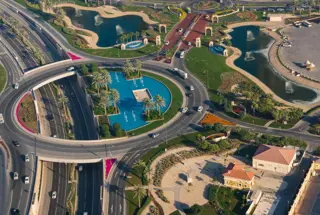 India's infrastructure boom is changing real estate rules. With 34 new access-controlled ring roads planned and 36 ongoing projects, cities are reducing congestion while creating valuable corridors. These 100-120 kmph highways are both bypasses and equity boosters, transforming overlooked areas into future commercial hubs.
Top Appreciation Zones to Watch
Pune's PMRDA Corridor: The ₹17,000 crore ring road (target completion 2026) drives 28% annual land price increases near Chakan. Pre-construction commitments exceed ₹5,200 crore as eight flyovers, and Nashik-Bangalore connectivity boost commercial leasing.
Delhi's UER-II Belt: 95% complete at ₹8,000 crore, this 76-km third ring road makes Najafgarh and Bawana hotspots. Logistics hubs now command 32% premiums, amplified by the Jewar Airport connector finishing in September 2025.
Tier-2 Gamechangers: Nashik, Amaravati, and Tirunelveli leverage Bharatmala's 20,000 km completed highways. Warangal land prices tripled since 2022 near proposed ring roads—outpacing Hyderabad's growth.
Strategic Investment Insights
Development Control Zones (DCZs), 15-meter no-build strips flanking highways, create immediate scarcity value. Developers target the 2-km regulated buffer where mixed-use projects thrive. States offer five financing models; land-pooling options slash entry costs by 30% for early movers.
Discerning developers exploit corridors where elevated roads intersect metro lines. These nodes deliver 35%+ ROI within five years as PM Gati Shakti's integrated planning cuts delays by 40%. Pune's eastern sector exemplifies this 90% land acquisition complete, with 22% FDI growth in adjacent industrial parks.
Why Timing Matters Now
Road infrastructure contributes 3.2% GDP growth per ₹1 invested, data proving these aren't mere construction projects but economic drivers. The NCR's 2,320 km overhaul (69% complete) shows scale: 1,578 km already decongesting highways at ₹63,934 crore. Nationwide construction surged from 1 lakh km (2006-07) to 7.7 lakh km (2024-25).
Smart city integrations add future-proofing layers. Trivandrum's IoT-enabled traffic management along its ring road attracted 22% higher commercial investments versus non-connected zones. In Nashik, parcels near blueprint stages triple in value before tarmac meets tire.
Conclusion
The convergence of Bharatmala Pariyojana, DCZ regulations, and smart city integrations creates a rare window for 25-35% annual appreciation. Priority should go to zones with 90%+ land acquisition (like Pune's eastern corridor) and multimodal logistics park plans. These corridors don't just ease commutes, they convert patience into profit, redefining India's real estate wealth map one ring road at a time.