
Office space availability in India's top cities plummeted by over 75% in Q2 due to high vacancy rates and weak commitments in ongoing projects, marking the lowest supply in recent quarters.
Unitech Group has leased 8 lakh sq ft in its Gurgaon Tech-park SEZ to Accenture, potentially yielding ₹1,000 cr over 15 years, while exploring stake sale to Blackstone and GIC.

Mumbai's rental values dipped slightly in Q3 2023, with Lower Parel, Thane, and Navi Mumbai seeing the most leasing activity. Key business districts witnessed a decline in commercial leasing.
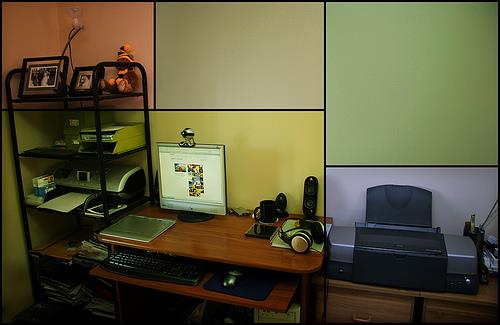
Mumbai commercial realty outperforms NCR, offering higher investment returns, according to Knight Frank. This is attributed to favorable business conditions, talent access, and connectivity.

Cadbury India to sell Mumbai HQ for Rs.450 Cr, citing need for better facilities

Weak office space demand has negatively impacted air conditioning manufacturers. A resurgence in demand, driven by IT and ITeS sectors, is expected to boost both the commercial sector and A/C sales.

Steelcase, a US-based furniture company, leased 50,000 sq. ft. of office space at IndoSpace Industrial and Logistics Park in Chakan to set up its first production unit in India.
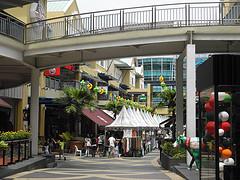
Vacancy rates in Indian shopping malls are on the rise, particularly in Delhi-NCR and Mumbai. Experts attribute this to an oversupply and mismatch with demand.

Air India intends to lease Delhi real estate to government enterprises, favoring them over private companies. ONGC, LIC, and SIB have displayed interest in leasing the property.

Sanofi India acquires 150,000 sq. ft. of office space in Powai, Mumbai, planning to shift their headquarters from Andheri to this new location worth Rs.220 Cr.
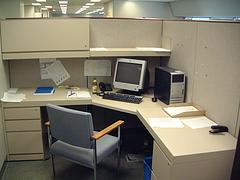
Office space demand in India is projected to reach 30.5 million sq. ft. in 2013, a 12% year-over-year increase, driven by improving global economy, increased FDI, and revised repo rates.

Commercial real estate faces challenges due to a decline in office space absorption by IT firms across India's top eight cities. This slowdown impacts both demand and supply.

Godrej Properties and Jet Airways are partnering on a 1.3 million sq ft commercial project in Mumbai's Bandra Kurla Complex. The project, Godrej BKC, is expected to generate Rs. 3,500-4,000 crore.

The demand for office space in India is set to rise as foreign retailers like Starbucks and H&M expand their operations in major cities.

Tier-2 cities in India drive growth through stabilized domestic demand for residential and commercial properties.
Corporates are relocating their headquarters to larger offices as rental prices decline in major cities like Bangalore and Mumbai, seeking better amenities.
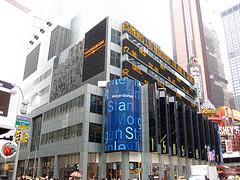
Morgan Stanley is considering investing in a 1.6 million sq ft office space development in Mumbai's Bandra Kurla Complex, marking their first commercial sector investment in India.

Office space absorption in Bangalore fell by 24% in 2012 compared to 2011 due to weaker demand from the IT and ITeS sectors, impacted by the global economic slowdown.

Sahara India's bid for a 30-year lease of Air India's Mumbai headquarters was rejected. Air India aims for shorter leases to retain control and avoid the fate of Sears Tower.

Bangalore's Outer Ring Road (ORR) is booming as a commercial real estate hub, driven by strong IT sector demand and limited office space, according to a Jones Lang LaSalle India report.
Exilion, a real estate firm, intends to purchase Nokia's headquarters in Espoo, Finland for approximately ₹1218 Crore, with Nokia leasing it back as part of cost-cutting.
Air India's plan to lease vacant floors in its Nariman Point headquarters faces challenges due to tough market conditions, but the Civil Aviation Minister remains confident. The plan aims to raise funds by leasing or selling properties in Delhi and Mumbai.

Pune's office space demand remains largely stable, driven by IT and ITES sectors. Experts anticipate absorption to reach 4 million sq. ft. by year-end, with CBD areas seeing rental increases.

Commercial real estate demand rebounded in India during Q3 2012. Bangalore led office space absorption, followed by Hyderabad and Mumbai. Rental markets remained stable.

India's booming service sector fuels demand for commercial real estate, particularly in major cities. Despite economic slowdowns, IT, BFSI, and other service industries show strong growth, driving office space absorption to new heights.